
Crochet hook materials and handles: comfort, control, and when to use each
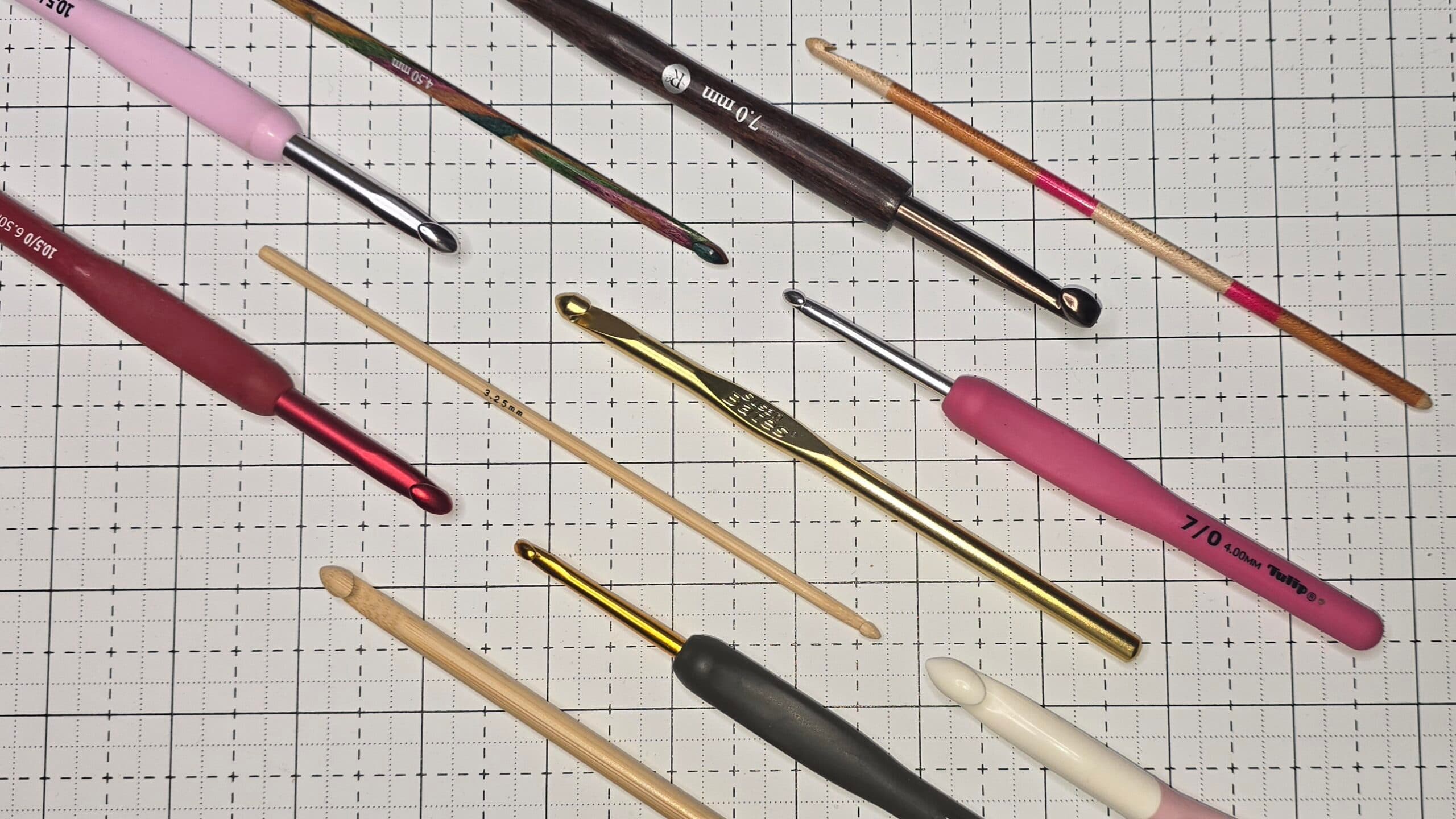
Crochet hook material and handle design can affect comfort, speed, and tension. Learn the differences between bamboo, aluminium, steel, wood, and ergonomic hook
This post may contain ads and affiliate links, which help support Crafting with Beth at no extra cost to you. I only recommend tools and materials I genuinely use or believe will be helpful for your crafting. For more information, please see our Privacy Policy, Cookie Policy, and Affiliate Disclosure. Thank you.
Once you’ve explored the shape of crochet hooks—such as inline and tapered—the next thing you’ll notice is how different hooks feel in your hand.
The material of the hook and the style of the handle both play a big role in comfort, tension, and how smoothly your yarn moves. While no single hook is perfect for everyone, understanding these differences makes choosing the right hook much easier.
This post looks at common crochet hook materials and handle styles, and when each is best used.
Why hook material and handle design matter
Crochet involves repeated hand and wrist movements. Over time, the wrong hook can cause hand fatigue, uneven tension, or discomfort—especially during longer sessions.
The right hook material and handle shape can:
- Improve comfort and reduce strain
- Help control yarn tension
- Make stitches feel smoother and more consistent
Bamboo crochet hooks
Bamboo hooks are lightweight with a slightly textured surface. This texture creates gentle friction, helping the yarn grip the hook.
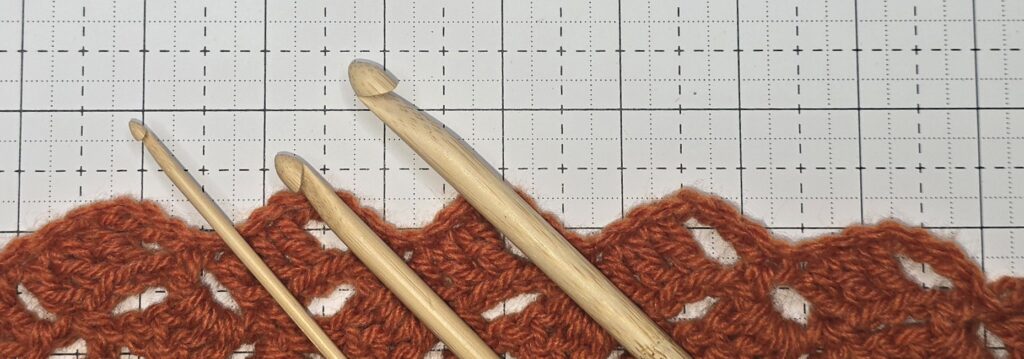
Best uses for bamboo hooks
- Beginners learning tension control
- Slippery yarns such as cotton or silk blends
- Relaxed, mindful crochet sessions
Bamboo hooks tend to slow crochet slightly, which can be helpful when accuracy matters more than speed. You can also check my chosen Tulip bamboo crochet hooks using my link which I personally use.
Aluminium crochet hooks
Aluminium hooks are smooth, lightweight, and widely available. Yarn glides easily over the surface, making them a popular all-purpose choice.
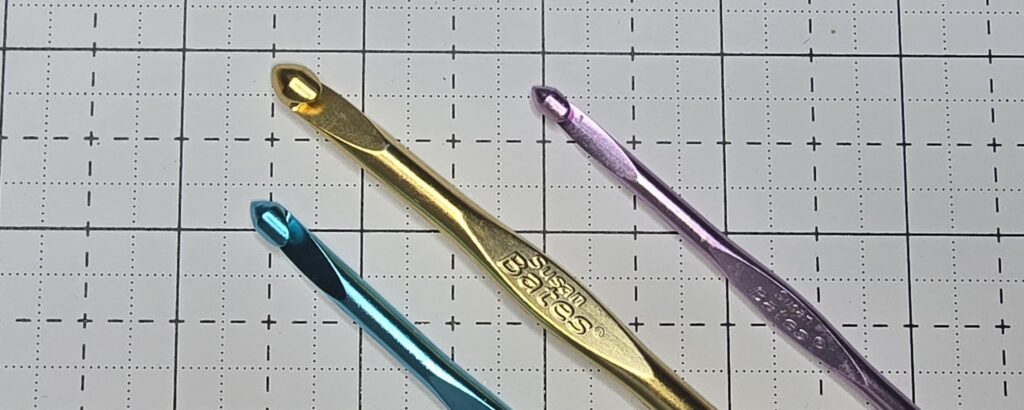
Best uses for aluminium hooks
- Everyday crochet projects
- Medium-weight yarns
- Crocheters who prefer smooth, fast motion
Because they’re versatile and affordable, aluminium hooks are often a staple in most crochet toolkits.
Steel crochet hooks
Steel hooks are smaller and stronger than other materials, designed specifically for fine thread crochet.
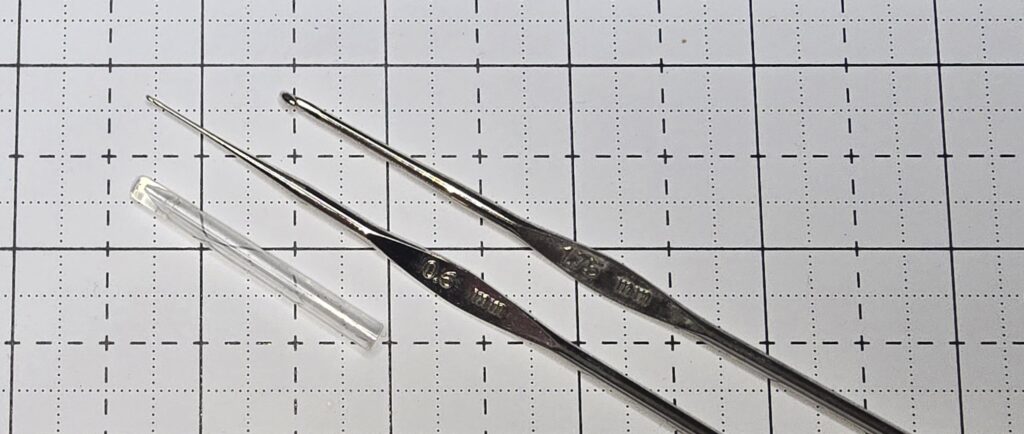
Best uses for steel hooks
- Lace crochet
- Thread crochet and fine motifs
- Delicate, detailed work
Steel hooks are not typically used for yarn-based projects, but they are essential for fine crochet techniques. You can also check my chosen Tulip steel crochet hooks using my link which I personally use.
Wooden and other natural fibre hooks
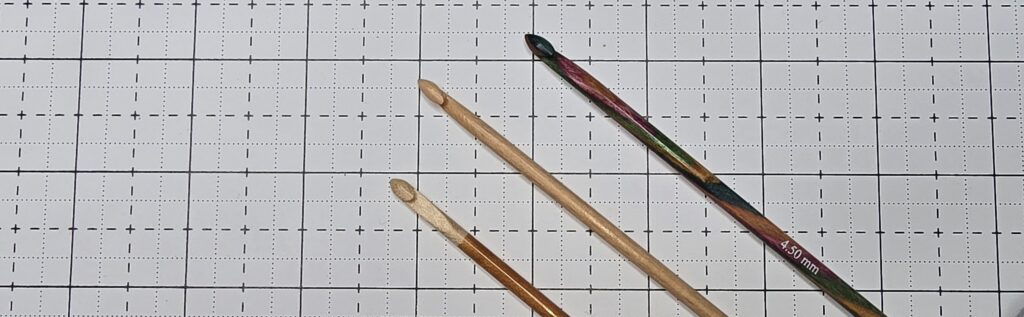
Wooden hooks vary widely depending on the type of wood used. They are often warm to the touch and lighter than metal hooks.
Best uses for wooden hooks
- Long crochet sessions where comfort matters
- Yarns that benefit from gentle grip
- Crocheters who prefer a natural feel
Handcrafted or premium wooden hooks are often chosen for comfort and aesthetics rather than speed.
Ergonomic and handled crochet hooks
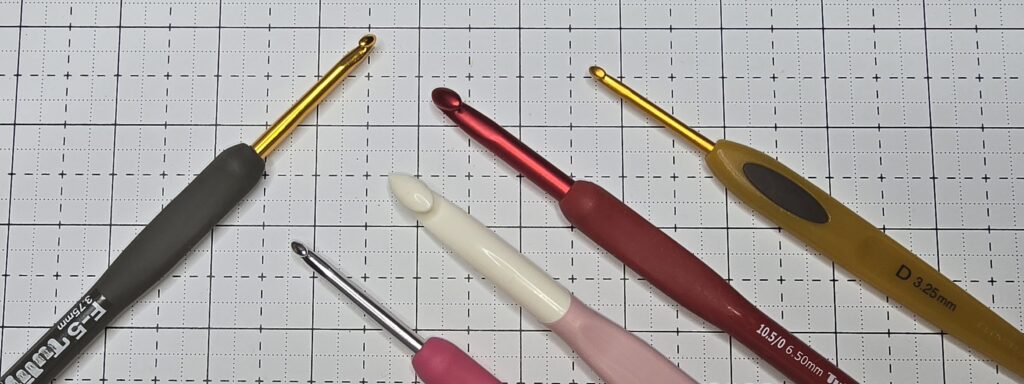
Ergonomic hooks feature shaped or cushioned handles designed to reduce hand strain. The hook itself may be aluminium, steel, or wood, paired with a thicker grip.
Best uses for ergonomic hooks
- Long crochet sessions
- Crocheters with hand or wrist discomfort
- Projects requiring repetitive stitches
Ergonomic hooks can be especially helpful for maintaining comfort and consistency over time. You can also check my chosen Tulip Etimo crochet hooks with cushion grips using my link which I personally use.
Are expensive crochet hooks worth it?
More expensive hooks often offer better finishing, balanced weight, and thoughtfully designed handles. While they can improve comfort, they won’t automatically improve technique.
If you crochet frequently or experience discomfort, investing in a higher-quality hook can be worthwhile. Otherwise, affordable hooks work perfectly well for learning and everyday projects.
Let comfort guide your choice
The best crochet hook is the one that feels comfortable, suits your yarn, and supports your crochet style.
Many crocheters keep a small variety of hook materials and handle styles and choose based on the project. Over time, your preferences may change—and that’s part of the journey.
Next steps
Now that you understand hook shape, material, and handle design, you’ll be better equipped to choose tools that support your crochet experience—rather than working against it.
