
Matching yarn to hook size: how to get the best results in crochet
Using the right hook size for your yarn makes crochet easier and more enjoyable. Learn how yarn weight and hook size work together, when to follow the label, an
This post may contain ads and affiliate links, which help support Crafting with Beth at no extra cost to you. I only recommend tools and materials I genuinely use or believe will be helpful for your crafting. For more information, please see our Privacy Policy, Cookie Policy, and Affiliate Disclosure. Thank you.
One of the most common questions in crochet is whether you should always use the hook size recommended on the yarn label or in a pattern.
The simple answer is: it depends. Matching yarn to hook size is about balance—between stitch definition, fabric drape, and comfort while crocheting.
This post explains how yarn weight and hook size work together, when to follow recommendations, and when adjusting can improve your results.
Why hook size matters in crochet
The size of your crochet hook affects how large your stitches are, how the fabric feels, and how easily the hook moves through the yarn.
A hook that’s too small can make stitches tight and uncomfortable to work, while a hook that’s too large may create loose, uneven fabric.
Understanding yarn weight and hook recommendations
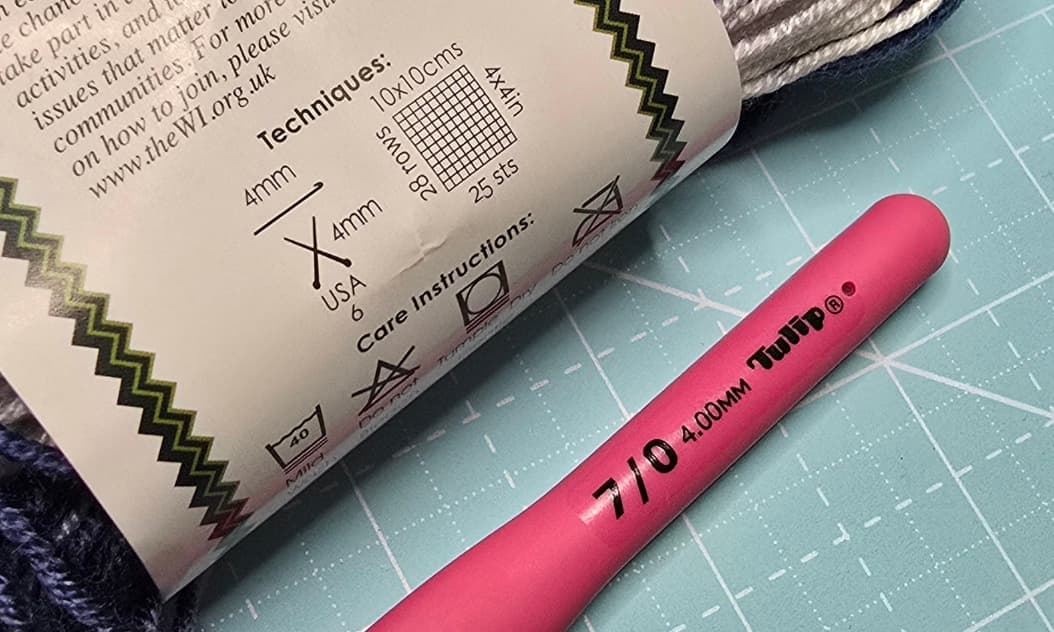
Most yarn labels include a suggested hook size or a small range of sizes. This is a helpful starting point, especially for beginners.
Yarn weight categories give a general idea of thickness, but individual yarns within the same category can behave differently.
Common yarn weights and typical hook sizes
- DK yarn – often paired with 4–4.5 mm hooks
- Worsted / aran yarn – often paired with 5–6 mm hooks
- Bulky yarn – often paired with 6.5 mm or larger hooks
These are guidelines rather than strict rules.
When to follow the pattern’s hook size
If you’re following a pattern that needs to match specific measurements—such as garments or fitted accessories—it’s best to start with the hook size suggested in the pattern.
Patterns are written using a particular hook size to achieve the designer’s intended gauge.
When adjusting hook size makes sense
Adjusting hook size is very common and often necessary.
- If your stitches feel too tight, try a larger hook
- If your fabric feels too loose, try a smaller hook
- If your hands feel strained, a larger hook can help relax tension
Comfort and stitch consistency are just as important as matching a number on a label.
How yarn fibre affects hook choice
Different fibres behave differently on the hook.
- Cotton has little stretch and may feel tighter on smaller hooks
- Wool is elastic and forgiving, often working well with recommended sizes
- Acrylic glides easily and may feel looser on larger hooks
This is why two yarns of the same weight can feel very different when crocheted with the same hook.
Swatching: the best way to check yarn and hook pairing
Making a small swatch before starting a project helps you see how the yarn and hook work together.
- Check stitch size and fabric feel
- Adjust hook size if needed
- Get comfortable before starting the main project
Swatching may feel unnecessary at first, but it often saves time and frustration later.
There is no single “correct” hook size
Two crocheters using the same yarn and hook can produce very different results. Personal tension, grip, and comfort all play a role.
Rather than aiming for perfection, aim for fabric that feels right for your project and enjoyable to crochet.
Next steps
Learning how to match yarn to hook size builds confidence and flexibility. With practice, adjusting hook size will feel natural and intuitive—supporting better tension, comfort, and finished results.
