
Why pressing matters in sewing (and why it’s not the same as ironing)
Pressing is a core sewing skill that improves accuracy, fit, and finish. Learn why pressing matters, how it differs from ironing, and simple pressing tips every
This post may contain ads and affiliate links, which help support Crafting with Beth at no extra cost to you. I only recommend tools and materials I genuinely use or believe will be helpful for your crafting. For more information, please see our Privacy Policy, Cookie Policy, and Affiliate Disclosure. Thank you.
Pressing is one of the most overlooked skills in sewing. Many beginners rush past it, eager to keep sewing, only to wonder later why their project doesn’t look quite right.
The truth is, pressing is not an optional finishing step—it’s an essential part of the sewing process. Knowing when and how to press can dramatically improve accuracy, fit, and the overall look of your work.
Just as importantly, pressing is not the same as ironing. Understanding the difference can instantly elevate your sewing results.
Pressing vs ironing: what’s the difference?
Although the same tool is used, pressing and ironing serve very different purposes in sewing.
Ironing
Ironing usually involves moving the iron back and forth to remove wrinkles from fabric. While this is useful for everyday clothing, it can stretch or distort fabric during sewing.
Pressing
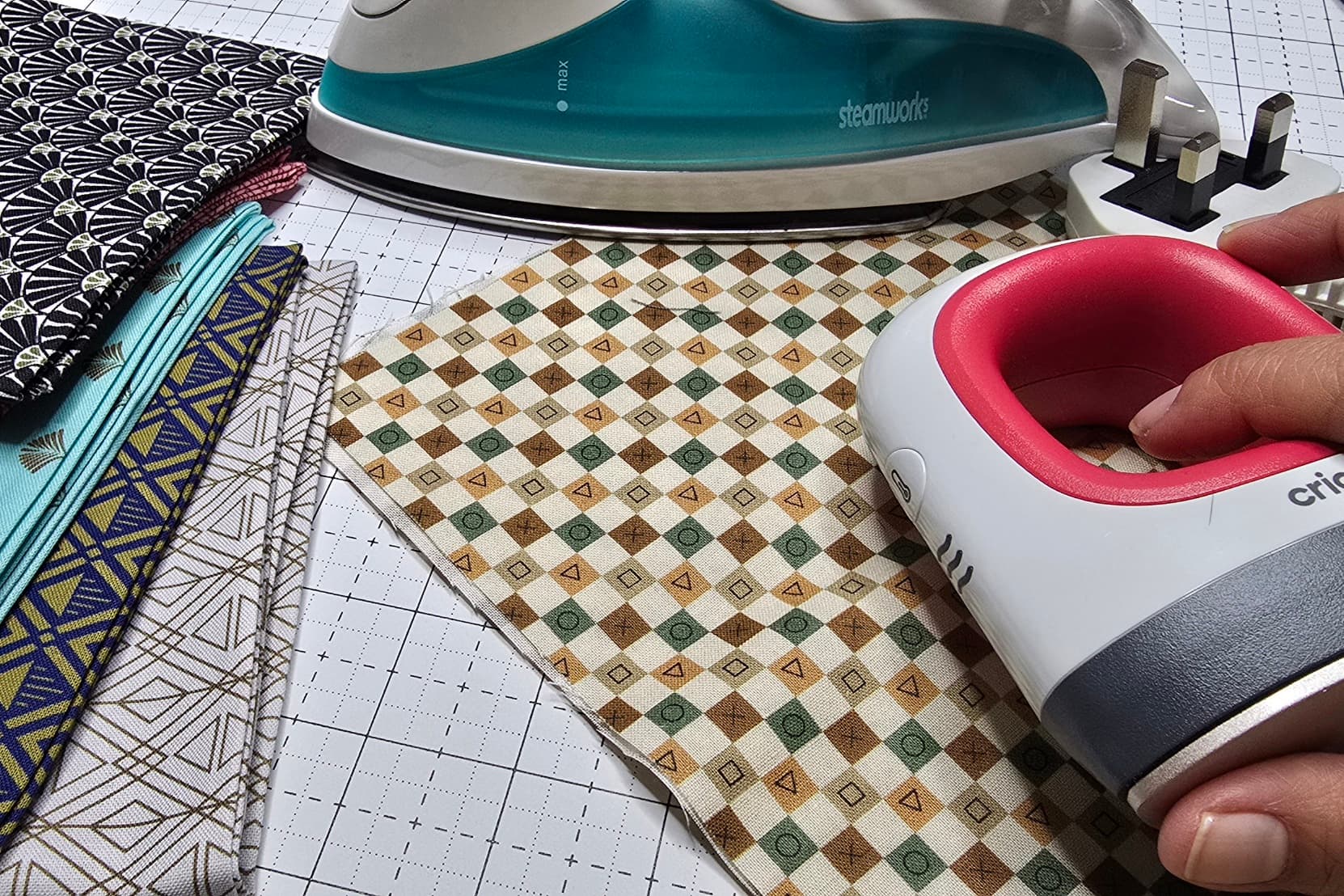
Pressing means placing the iron down, applying heat and steam if needed, then lifting it straight up. This sets stitches and seams without shifting the fabric.
In sewing, pressing is about precision and control, not speed.
Why pressing matters so much in sewing
Pressing affects nearly every stage of a sewing project. Skipping it may save time initially, but it often creates problems that are much harder to fix later.
- Improves accuracy when matching pieces
- Makes cutting and trimming more precise
- Creates a more professional finish
Well-pressed seams behave better, align more easily, and make the next steps in your project far smoother.
When should you press?
Pressing should happen throughout the sewing process, not just at the end.
- Before cutting – removes folds and distortion from fabric
- After sewing each seam – sets stitches and flattens seams
- Before joining pieces – ensures accurate alignment
- At the end – gives the project a polished finish
This may feel slow at first, but regular pressing actually saves time by preventing mistakes and uneven seams.
How pressing improves accuracy
Accuracy in sewing relies on flat, stable fabric. Pressing helps prevent bulk and distortion, which is especially important when working with multiple seams.
This is particularly noticeable in quilting and patchwork, where even a small amount of bulk can throw off measurements and alignment.
Pressed seams support other key skills such as maintaining a consistent seam allowance and cutting fabric accurately along the grain.
Common pressing mistakes beginners make
- Sliding the iron instead of lifting it
- Skipping pressing between steps
- Using too much heat on delicate fabrics
- Pressing without checking seam direction
Being mindful of these habits early on can prevent stretched fabric and uneven seams.
Simple pressing tips that make a big difference
- Use the correct heat setting for your fabric
- Press seams as sewn first to set the stitches
- Lift and place the iron—don’t drag it
- Allow seams to cool before moving the fabric
These small habits quickly become second nature and dramatically improve results.
Pressing is part of the craft
Pressing may not feel as creative as sewing, but it is one of the quiet skills that separates rushed projects from well-made ones.
By treating pressing as an integral part of sewing—not a chore—you’ll notice cleaner seams, better accuracy, and a more enjoyable sewing experience overall.
