
Why the head of a crochet hook matters — and how experience shapes preference
The head of a crochet hook quietly controls how yarn moves, stitches form, and hands work over time. Through experience, I’ve learned to recognise the engineeri
This post may contain ads and affiliate links, which help support Crafting with Beth at no extra cost to you. I only recommend tools and materials I genuinely use or believe will be helpful for your crafting. For more information, please see our Privacy Policy, Cookie Policy, and Affiliate Disclosure. Thank you.
Why the Head of a Crochet Hook Matters — and How I Learned to Notice the Difference
When crocheters talk about hooks, the focus is often on handle comfort, grip style, or whether a hook feels “nice” to use. While those things absolutely matter, they are not what determines how a stitch is formed.
The real work happens at the head of the crochet hook. Its shape, depth, angle, and finish quietly control how yarn is caught, how loops are drawn through, and how consistent stitches become — often without the maker realising why something feels easier or harder.
The hook head is where engineering meets yarn
The head of a crochet hook is not a decorative detail. It is a small piece of engineered geometry designed to manage tension, friction, and movement. Even tiny differences can change how a hook behaves.
Key elements of hook-head design include:
- The depth of the hook (how securely it holds the yarn)
- The angle of the lip (how the hook enters and exits a loop)
- The throat length (how easily yarn is drawn through)
- The presence or absence of a groove
- The smoothness of the surface finish
These features determine whether a hook glides, grips, splits yarn, drops loops, or produces uneven stitches. They also influence how much your hand needs to compensate during repeated movements.
Why this matters for learners and teachers
Two crocheters can follow the same pattern, use the same yarn, and choose the same hook size — yet end up with very different results. This is often blamed on tension or experience, but the hook head itself plays a role.
For beginners, a poorly balanced hook head can make learning unnecessarily frustrating. For teachers, it can create confusion when a stitch demonstrated clearly on screen behaves differently in a learner’s hands.
Understanding hook-head geometry helps remove blame from the maker and shifts the conversation toward tool awareness.
How experience changes what you notice
Over time, many crocheters develop an intuitive sense of which hooks “just work” for them. This isn’t bias — it is familiarity with how certain hook heads interact with yarn and hand movement.
After working with many hook types across different materials — from bamboo to aluminium to steel — I began to notice consistent design qualities that made stitching feel more predictable and less effortful.
That recognition, rather than branding or marketing, is why I personally gravitate toward crochet hooks made by :contentReference[oaicite:1]{index=1}. Across materials, the hook head behaves consistently: the yarn is guided rather than forced, stitches form evenly, and the hook neither fights nor rushes my hands.
This is not about one brand being “better” than others. It is about recognising when a tool’s engineering aligns with how you crochet, teach, and work for extended periods.
This is not endorsement — it is awareness
Every crocheter has different hands, tension habits, and creative goals. A hook that works beautifully for one person may feel wrong for another. The purpose of understanding hook-head design is not to persuade anyone to switch tools, but to encourage informed choice.
Once you start paying attention to the head of the hook — how it catches yarn, how it releases loops, and how it supports consistency — you may find that your preferences are shaped by engineering rather than aesthetics.
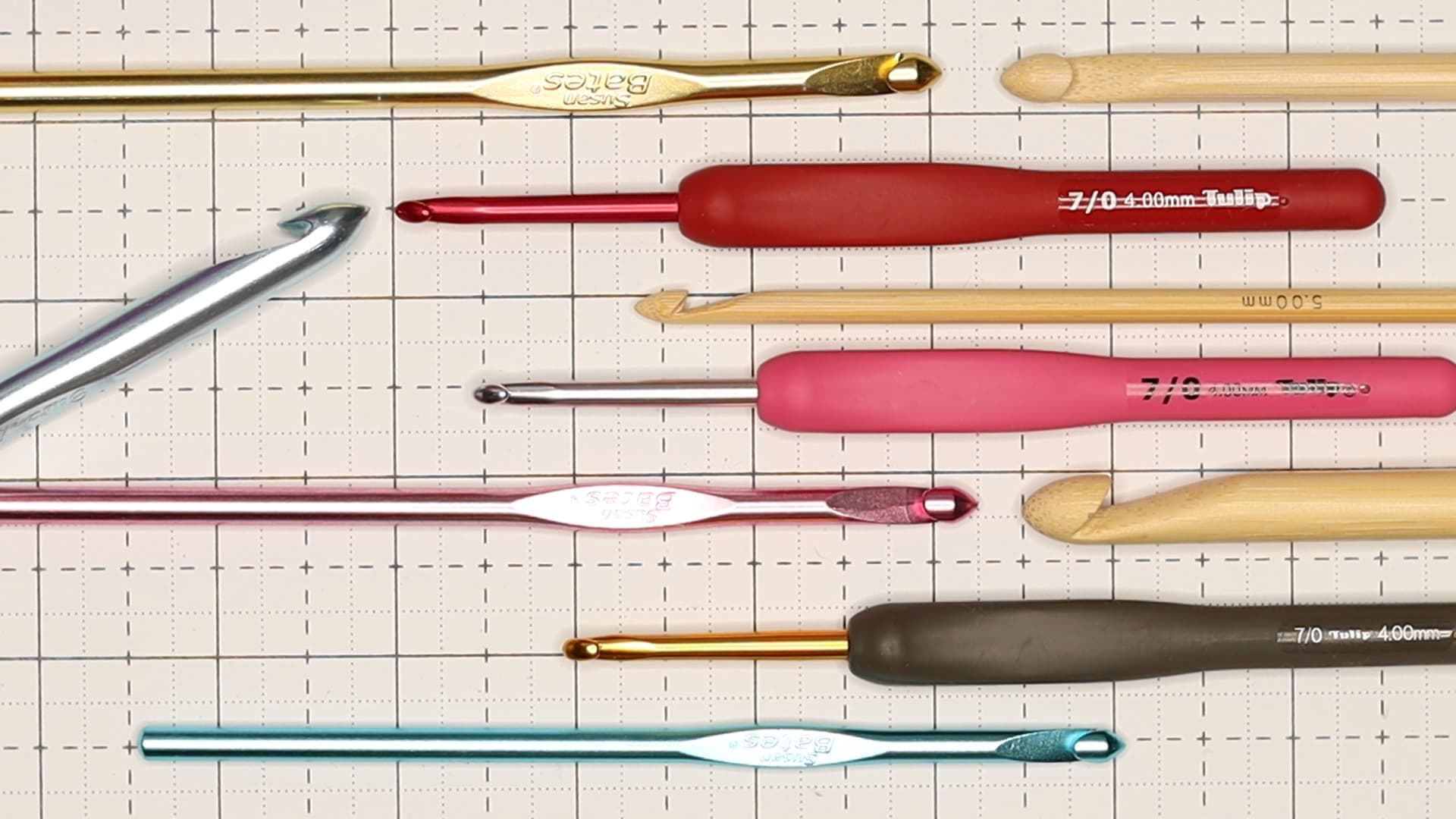
Here I want to share with you the crochet hooks I use personally
- Tulip Etimo crochet hooks product from Japan
- Susan Bates crochet hooks, products of the US
- I also like the bamboo crochet hooks from Tulip Japan
Seeing the tool differently
Crochet is a tactile craft, but it is also a technical one. Tools matter, not as status symbols, but as quiet partners in the making process.
Understanding why the head of a crochet hook matters empowers makers to choose tools with intention, learn with confidence, and teach with clarity — regardless of brand, price, or popularity.
Tools that grow old with you
As my crochet practice has matured, I’ve found myself thinking less about trying new tools and more about which ones I trust to stay with me over time. Some crochet hooks are not just comfortable in the moment — they are tools you can imagine growing old with.
These are the hooks that feel consistent year after year, across different yarns and projects. The ones that don’t demand constant adjustment, don’t fight your tension, and don’t distract from the rhythm of making.
For me, recognising this came from experience rather than comparison. It was about noticing which hooks supported my hands, my teaching, and my stitching without calling attention to themselves — the kind of tools that quietly earn their place over a lifetime of making.
