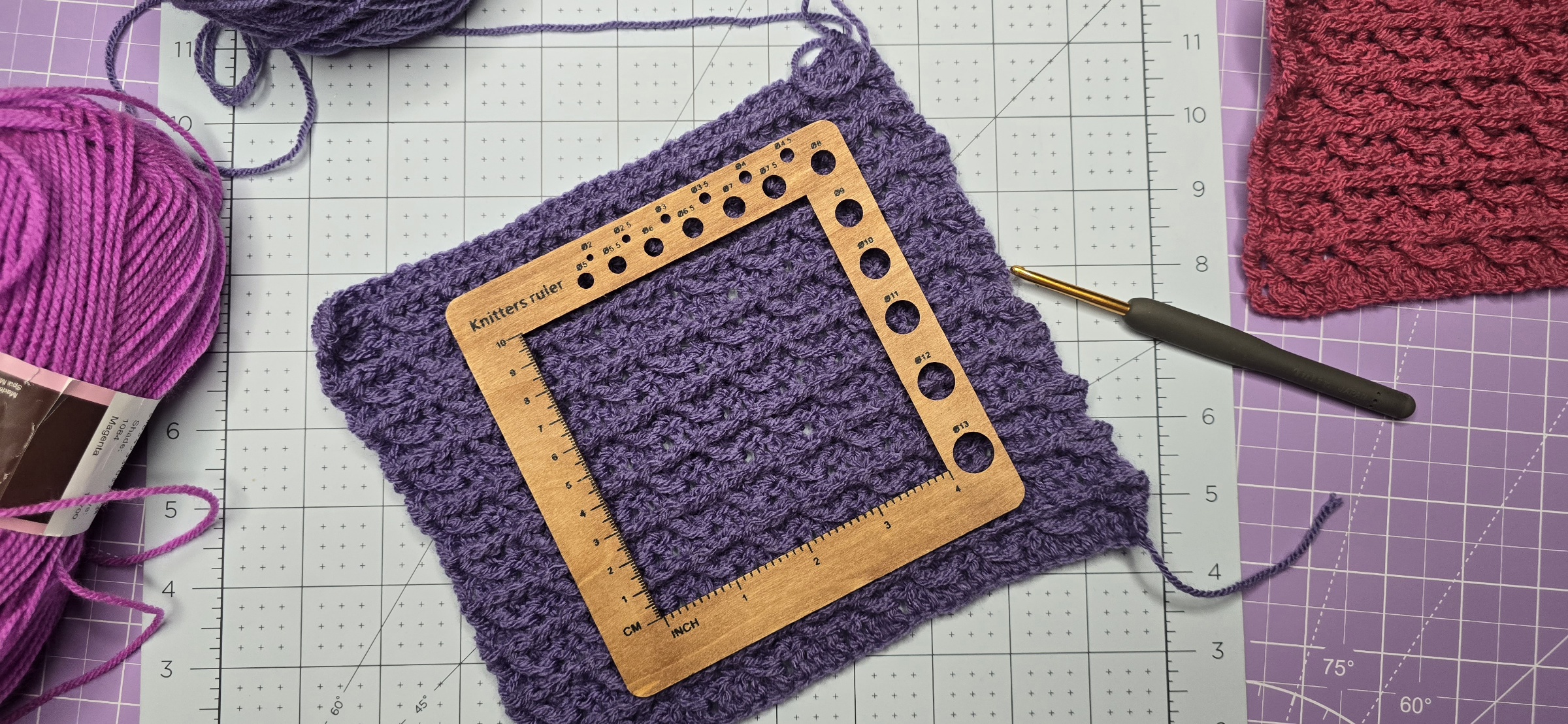
How to measure a crochet tension square (gauge swatch) – the right way
Measuring a crochet tension square (also called a gauge swatch) is one of the most important steps in crochet—especially for garments, fitted items, or any project where size really matters. It may feel like an extra step, but it can save you hours of work (and a lot of frustration!) later on. Below is a simple, accurate method you can follow every time to check your gauge properly.
What Is a Crochet Tension Square?
A tension square is a small sample of crochet fabric made using the same:
Yarn
Hook size
Stitch pattern
as your real project. The goal is to compare your stitch size to the pattern’s gauge, so your finished item comes out the correct size.
Step 1: Make a Swatch Bigger Than the Gauge
If your pattern says something like:
10 cm x 10 cm (4" x 4") = 20 stitches x 16 rows
Don’t crochet a swatch that’s exactly 10 cm. Instead, make it bigger—at least:
12–15 cm (5–6 inches) wide
12–15 cm tall
Measuring in the centre of a larger swatch is much more accurate because edge stitches can be tighter or looser.
Step 2: Finish the Swatch Properly
Fasten off your yarn
Gently lay the swatch flat
If the pattern recommends blocking (common for garments), block your swatch the same way you’ll block the finished item and let it dry completely. Gauge should be measured in the final state of the fabric.
Step 3: Use the Right Tools
A firm ruler or measuring tape
Optional: stitch markers, T-pins, or a stitch counter
Avoid bendy rulers, as they can distort your measurements.
Step 4: Measure Stitches (Width)
Place your ruler across the centre of the swatch.
Measure 10 cm (or 4 inches) horizontally.
Count how many full stitches fit within that space.
Ignore partial stitches at the edges.
Write your stitch count down so you can compare it with the pattern gauge.
Step 5: Measure Rows (Height)
Turn your ruler vertically in the centre of the swatch.
Measure 10 cm (or 4 inches) from bottom to top.
Count the number of rows within that space.
Do not count turning chains unless the pattern specifically tells you to.
Record your row count as well.
Step 6: Compare With the Pattern Gauge
Compare your stitch and row counts with the gauge listed in the pattern.
If your gauge matches
You’re ready to start your project with confidence.
If you have too many stitches
Your tension is likely too tight
Try using a larger hook
If you have too few stitches
Your tension is likely too loose
Try using a smaller hook
Always make a new swatch after changing hook size.
Extra Tips for Accurate Gauge
Crochet your swatch naturally—don’t force your tension.
Recheck gauge if you change yarn brand, hook material, or stitch pattern.
Gauge is especially important for garments and fitted items.
Why Gauge Matters
Skipping gauge can result in garments that don’t fit, blankets that turn out much larger or smaller than expected, or running out of yarn too early. A small swatch now can save a lot of time later.
Final Thoughts
Measuring a crochet tension square isn’t about perfection—it’s about confidence. Once you understand your own tension, patterns become easier, sizing becomes predictable, and crochet becomes more enjoyable.
My crochet favourites
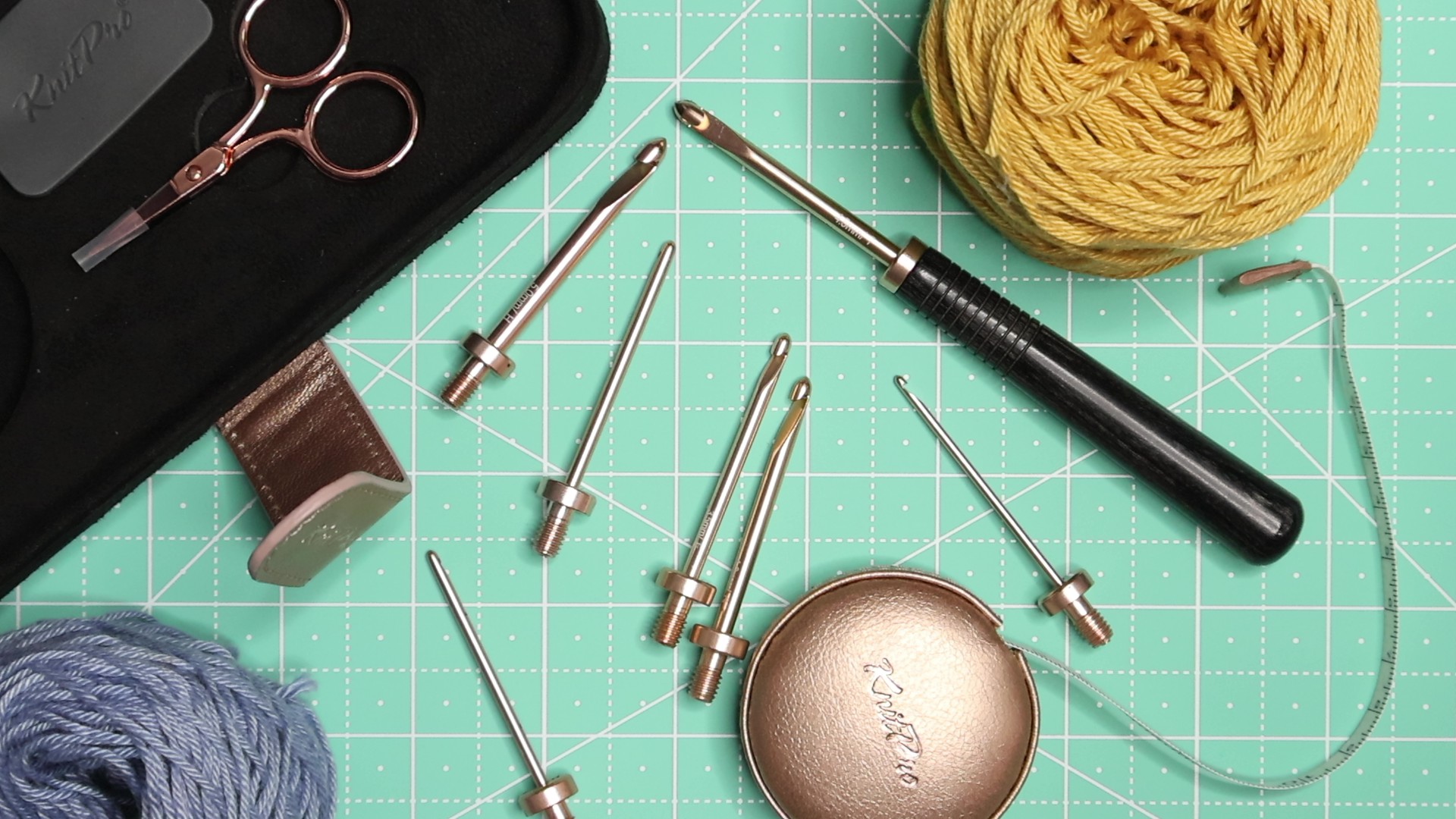
Discover the KnitPro Oasis Crochet Hook Set
Beautifully designed hooks with interchangeable convenience
Bring a little elegance to your crochet sessions with the KnitPro Oasis Interchangeable Crochet Hook Starter Set. Featuring a beautiful onyx wooden handle, rose-gold coloured hook tips and a selection of handy accessories, this thoughtfully designed set combines comfort, practicality and style. A lovely choice for crocheters who appreciate the control of inline-style hooks.